Showing posts with label privileges. Show all posts

Monday, December 9, 2013

52 Ways to Use Your VRPS Membership: Week 50: Batlingo like Karst and Spelunking

by Nancy Turnage, VRPS Central Office

Most of the information below is courtesy of the Virginia Department of Conservation and Recreation and a caving blog they published on 10/10/2012.

Virginia Department of Conservation and Recreation:  Virginia Natural Heritage Karst Program
Cave and Karst Protection


Virginia has 27 karst counties in the western part of the state in the Valley and Ridge region:


What Exactly is Karst?
Karst is a landscape formed from the dissolution of soluble rocks including limestone, dolomite and gypsum. It is characterized by sinkholes, caves, and underground drainage systems (Fig. 1). Nearly all surface karst features are formed by internal drainage, subsidence, and collapse triggered by the development of underlying caves (Palmer, 1991). Rainwater becomes acidic as it comes in contact with carbon dioxide in the atmosphere and the soil. As it drains into fractures in the rock, the water begins to dissolve away the rock creating a network of passages. Over time, water flowing through the network continues to erode and enlarge the passages; this allows the plumbing system to transport increasingly larger amounts of water (Gunn, 2004). This process of dissolution leads to the development of the caves, sinkholes, springs, and sinking streams typical of a karst landscape.

So, to sum:

  • Karst - a landscape resulting to a significant degree from the dissolution of bedrock
  • Karst - landscapes are most commonly underlain by limestone and dolostone bedrock.
  • Karst - landscape features include sinkholes, sinking and losing streams, caves, and large flow springs.
  • Karst - landscapes are characterized by underground drainage networks that commonly bypass surface drainage divides.
  • Karst - landscapes provide and support habitat for rare animal and plant species, including bats, cave-adapted invertebrates, plants that grow on the surface and at springs and seeps, and fish and mussels living in streams and rivers fed by karst springs.
  • Karst - landscapes supply water for many Virginians. Land use activities place these water supplies at risk.
  • Rivers leading to the Chesapeake Bay start in and flow through karst topography in Virginia.

DCR's Project Underground is a source of interdisciplinary instructional activities, and its staff conducts workshops and in-service training programs. These materials and workshops are designed for classroom teachers, cavern, park, museum, and nature center staff, or any youth-oriented group leaders.

The program - The purpose of Project Underground is to create and build awareness of and responsible attitudes toward karst and cave resources and their management needs. The project is an environmental education program designed to promote better understanding of caves and karstlands. It is a supplemental program for use by educators of kindergarten through high school age students. Participants in Project Underground activities will gain an understanding of how the underground environment is an important part of the total environment.
Workshops - Project Underground materials are available through workshops held in An Imageyour area. During these workshops, you will participate in hands-on activities, learn more about caves and karst ecology, and expand your knowledge and teaching skills. You will also meet and share ideas, information and resources with other professionals.
Facilitator training - Project Underground is based on the Training the Trainer model. Interested educators are trained to be certified workshops facilitators. You receive more in-depth information on caves and karst and the community issues surrounding them.

Happy spelunking!

Monday, December 2, 2013

52 Ways to Use Your VRPS Membership: Week 49, Smile for the CAM

by Nancy Turnage, VRPS Central Office

Consider attracting new patrons to your organization with a webcam.  They are easy to install and maintain.

Top 5 Webcams in Virginia, according to me:


http://www.timesdispatch.com/cheetah-cam/

#1 Cheetah-Cam:  5 new cheetah cubs and their mom, Lana, at the Richmond Metro Zoo
WARNING:  Cheetah-Cam can be addicting.  Watch them sleep, eat, play, pounce, snuggle.

http://www.vbbound.com/live-webcam-of-virginia-beach-boardwalk


#2 Virginia Beach Boardwalk Cam at 32nd and Oceanfront
Need a beach break?  Checkout the Cam and watch the rollerbladers, cyclists, and waves roll in.

http://www.justin.tv/vabirdwatcher#/w/7556974320/3


#3 Backyard Birdfeeder Cam
No time to commit to the Audubon Society?  No problem.
http://www.high-bridge-webcam.host56.com/campage.html

#4 High Bridge Cam

Get a distant, seasonal view of one of Virginia's most spectacular state parks as seen from Ashland Plantation.  The picture refreshes approximately every 60 seconds.

http://www.vcu.edu/ramcam/broad

#5 Virginia Commonwealth University Ramcam
The very cool thing about this Cam is that viewers can control the camera for 20 seconds.


AUTHOR'S NOTE:  I was referred to the Virginia Department of Game and Inland Fisheries James River "Shad Cam" at Bosher's Dam, which runs late March through early June.  So, while it is currently "offline", mark your calendars to return:

Over the past 35 years, populations of American shad, hickory shad, alewife, blueback herring, striped bass, and other anadromous fish species have steadily declined in Virginia.  VDGIF, in collaboration with a number of other partners, has been working to bring back these fish, mostly by restoring access to historic spawning areas throughout coastal Virginia.  In the James River, these species were known to spawn as far upstream as Eagle Rock until two sets of dams, in Lynchburg and Richmond, cut off over 400 miles of the river and tributaries.  In 1999, a fishway was constructed at Bosher's Dam, providing fish with access to 137 miles of the James River and 168 miles of its tributaries for the first time in nearly 200 years.  A camera at the fishway provides visitors a peek into this incredible journey as the fish return to spawn in the spring.

For more on webcams in Virginia, visit:

Monday, November 25, 2013

52 Ways to Use Your VRPS Membership: Week 48, Infographics is All the Rage

by Nancy Turnage, VRPS Central Office

An infographic (information graphic) is a representation of information in a graphic format designed to make the data easily understandable at a glance. People use infographics to quickly communicate a message, to simplify the presentation of large amounts of data, to see data patterns and relationships, and to monitor changes in variables over time.

Interested?  A sampling of Parks-and-Recreation-centric infographics are below.  Want to create your own?  You might want to read this:  5 Tools for Creating Your Own Infographics.


https://www.healthiergeneration.org/news__events/2013/07/18/802/why_we_heart_parks_rec
http://www.good-legal-advice.com/images/swimming-pool-accident-lawyer-causes-and-common-pool-injuries-infographic.jpg
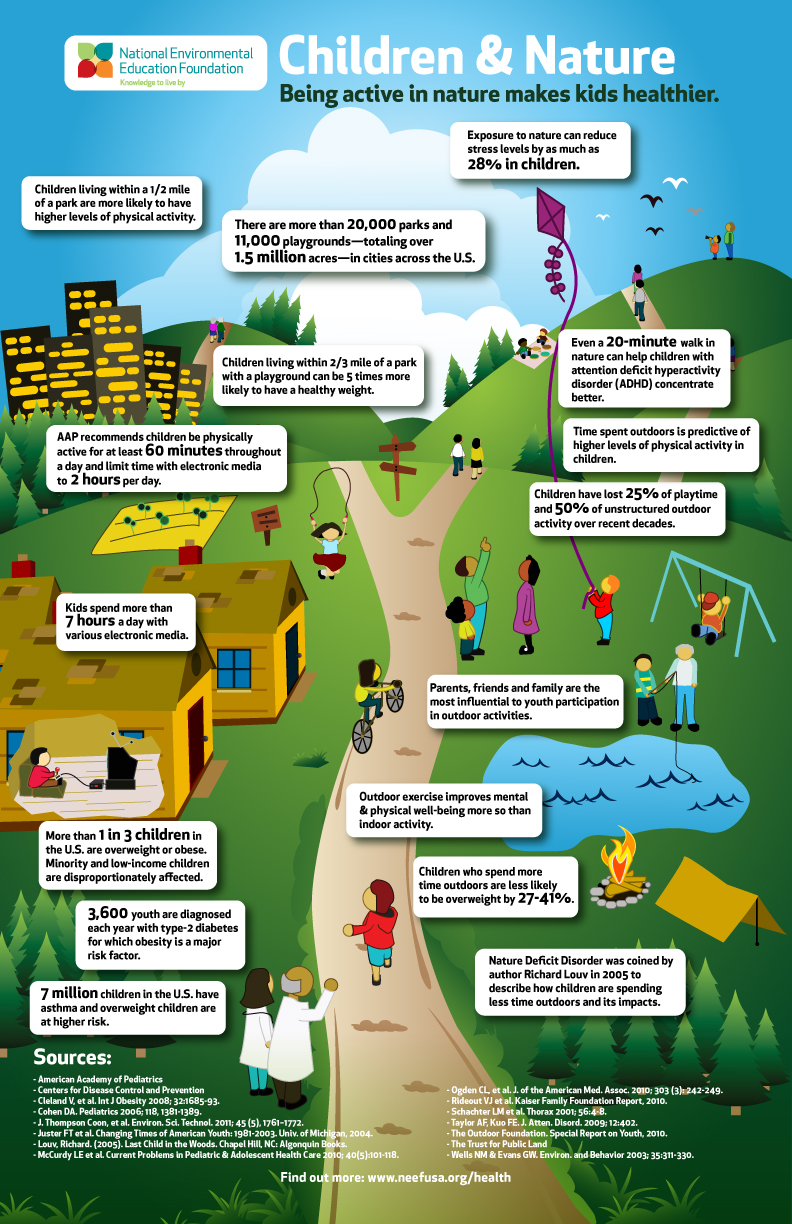
http://ww1.prweb.com/prfiles/2013/01/24/10356018/Children%20and%20Nature%20Infographic.jpg
http://www.physicalactivityplan.org/news.php

http://www.mnn.com/lifestyle/responsible-living/stories/infographic-united-states-of-the-environment

http://www.saludtoday.com/blog/tag/infographic/


Tuesday, November 12, 2013

52 Ways to Use Your VRPS Membership: Week 46, "Lumberjill" and Other Useful Terms

by Pam Scheets, CPRP, CPSI, Director of Shenandoah County Parks and Recreation, and Nancy Turnage, VRPS Central Office


Q:  What happens when a lobster claw falls off?
A:  It regenerates.

Q:  What happens when a lobster claw falls off and falls on the foot of an unsuspecting tourist who happens to be in your traveling party?
A:  They scream and everybody else laughs until they're crying.

Q:  What happens when you put 30 Virginia Shenandoans (or Shenandoans-by-proxy), comprised of shopaholics and lobster-rookies, on a "mechanically challenged" tour bus and head to Maine for 7 days and 6 nights?
A:  Lots of laughing, camaraderie, memory-making, and some pretty big VISA bills ....

Enjoy the following trip re-cap by Pam Scheets, CPRP, CPSI, Director of Shenandoah County Parks and Recreation, VRPS Past Board-of-Directors member, and VRPS 2013 Annual Conference Awards and Citations Co-Chair.


Location highlights:


We visited the Maine towns of Freeport, South Portland, Kennebunk, Kennebunkport, Bath, Camden, and Bar Harbor.

Stops included L.L. Bean, the Franciscan Monastery, Kennebunkport, the Wedding Cake House, Len Libby's Chocolatier, Maine Maritime Museum in Bath, Camden (lunch break), the Great Maine Lumberjack Show in Ellsworth, and Acadia National Park in Bar Harbor.

We also had driving tours of Portland, South Portland, Kennebunk, Kennebunkport, Acadia National Park, and Bar Harbor, and a drive-by of the Bush family estate (Walker Estate).

The owner/operator of the Great Maine Lumberjack Show is Lumberjill Tina, one of the participants of CBS’ “Survivor:  Panama.”  She was hysterically funny and told some really good stories.  She recently filmed some episodes in Alaska for a new reality show, but she couldn’t disclose any details.  She has been invited back several times to participate as a Survivor veteran, but she hasn’t gone yet.


Everyone marveled at the beauty of Acadia National Park; while there was just spots of leaf color there, we did see good spots of color on the way to Maine.  Acadia National Park was beautiful; because you can drive and park at the pinnacle - Cadillac Mountain, we were able to offer a longer free-time session in Bar Harbor for lunch and shopping.  That day, we had purchased boxed lunches for everyone; a few stayed at the park to hike and to eat lunch while we took the rest of the group into town where they could eat on the main town green overlooking the water and the bay/boats.  After lunch, many shopped and shopped and shopped while others took photos or just relaxed on the green.  It was a lovely, warm afternoon.

Many of the ladies (and one or two men) swam every night after dinner; we utilized the pools and saunas each night and told fabulous stories about family, friends, and other trips.  We also talked over the day and discussed what everyone liked and what they would like to do the next day.


Lobster highlights:

We enjoyed two lobster dinners on the trip - one in South Portland and one in Bar Harbor.  Many from our group had lobster before but never had to crack and open them.  Waitstaff were on-hand to assist “newbies” with pickin’ lobster (much like pickin’ crabs).

The educational session at the Bar Harbor Oceanarium and Lobster Hatchery was absolutely hysterical.  The “old salt” who gave the talk was a lobsterwoman who had been on the water her whole life.  The highlight is a live blue lobster (pretty awesome to see).  As she was holding it out to the front row of the audience, one of its legs fell off (they regenerate) and on the foot of one of our participants.  You should have heard the screaming, giggling, and snorting!  I had tears I was laughing so hard.  Everytime someone made a wise crack or asked a silly question, she threw a claw band (used to hold the claw closed) at them.  We visited the hatchery afterwards and saw females loaded with eggs as well as lobsters in various growth stages - fascinating to see.

HOWEVER, I noted to PML Tours that they should probably re-arrange that Oceanarium/Hatchery tour, because as soon as we left there, we went to a Lobsterbake and ATE the lobsters we just learned about!


Bus highlights:


On the way up, our bus developed a “vibration” that caused most of the bus to shake and shimmy.  Because we stayed overnight in Connecticut on the way up and arrived in Maine so early on our first day, we made an unplanned stop at L.L. Bean to drop the group while the bus headed off for some “garage time.”  Two new tires cost just under $2,000!  So, the additional time really pleased everyone as we had several shoppers on this trip!

On the last day as we started our return trip, we made 70 miles before the bus developed more issues, leaning very heavily to one side.  We ended up sitting in a fast-food parking lot for 6 hours waiting for repairs.  We chartered another bus to get us partially home that night while a third bus was driven from North Carolina for our morning departure.  We had a lovely evening drive to Hartford for our night's stay after changing our itinerary (including our hotel and route home).  The next morning, we loaded our replacement bus only to disembark 5 minutes later when it was discovered that it had a flat tire.  We unloaded and waited an additional two hours for a tire change.  After that, we re-loaded and headed home!


Because we changed routes, we were able to work in another unplanned stop at Cabela’s in Hamburg, PA; this was another shopping destination requested by the group because we had passed one on the way to Maine!  At this stop, the group broke into three different groups:  while some went shopping at Cabela’s, some ate at Cracker Barrel, and some went to a few of the fast-food joints.

We watched four movies and one stand-up comic routine on our DVD player, and this group laughed and laughed and laughed a whole lot during the trip.

To enjoy more of Pam's photos from the "Maine's Coast in Autumn" trip, visit the trip album at VRPS on Flickr.


Monday, November 4, 2013

52 Ways to Use Your VRPS Membership: Week 45, Partnering by Creative Means

by Nancy Turnage, VRPS Central Office

The "Little Free Library" is an organization that, in a nutshell, is a collection of worldwide locations that offer anyone (ANYONE) the opportunity to take a book (or two) and bring a book to share.  The books are housed, as you might guess, in "little houses" - of varied designs.  The idea, among other things, is to solve that problem of, as the Winchester Star puts it:

"When school doors close and the library lights go out for the night, most students have no place to grab a new book."

The Little Free Library website offers a comprehensive map identifying all the LFL's around the world.  In Virginia, there are about 33, including

  • Alexandria
  • Arlington
  • Big Stone Gap
  • Charlottesville
  • Chesapeake
  • Churchville
  • Danville (9!)
  • Fredericksburg
  • Henrico (2)
  • Keysville
  • Leesburg
  • Lexington
  • Lynchburg
  • Mineral
  • Newport News
  • Norfolk
  • Richmond (2)
  • Virginia Beach
  • Winchester
There could be more that haven't made it to the map yet.  In fact, Little Free Library believes only about one-fourth of the libraries are actually mapped.

Danville appears to be the most prevalent Little Free Library Virginia community, boasting 9.  And, while most of the LFL's find their homes at private addresses, subdivisions, and schools, there are Virginia LFL's located at an art studio, a Kiwanis club, and even a Starbucks.  Likewise, it appears that some Danville, Lexington, and Winchester parks are homes to LFL's.


It's neat - a collection of literary lovers have established their own library system and become part of a greater good.  There is no need to be a nonprofit or affiliated with some sort of organization - anyone can do it.  By the end of 2013, Little Free Library believes they will have over 15,000 LFL's in 55 countries.  Interested?  Visit their website to get started.  Folks have shared library-box-construction plans, created a Facebook page, and offered instruction.  Then share YOUR story with us!

Tuesday, October 1, 2013

52 Ways to Use Your VRPS Membership: Week 40, Spinning Wheels

by Nancy Turnage, VRPS Central Office
Every time I see an adult on a bicycle, I no longer despair for the future of the human race.
~H.G. Wells
Most college campuses are full of bicycles, and what's more, they're full of cyclists.  Clearly, cycling is better for personal health, our shared environment, and the student's wallet, and it often saves riders time from commuting and parking.  As a result and in support of their communities, administrations are implementing free DIY bicycle repair stations - Virginia Tech, University of Virginia, Virginia Commonwealth University, Radford University - to name a few.
Do-It-Yourself Bicycle Repair Station on campus at Virginia Tech

But why limit the benefits of cycling to the students?  Not only that, why limit it to bicycle repair?  Communities throughout the world, and Virginia, are funding bicycle sharing programs - what's happening in your's?


Tuesday, September 24, 2013

52 Ways to Use Your VRPS Membership: Week 39, Breaking Boundaries

Sometimes you have to go a bit farther outside the box.
by Nancy Turnage, VRPS Central Office

Call Facebook what you will - to some it's a lifesaver, to some it's a distraction, and still others are indifferent.  But, without a doubt, it offers a wealth of information.  How that information is managed, is up to the user.  For me, it is a valuable tool in composing article blocks for the weekly E-Update member e-blast that arrives each Wednesday afternoon in the inboxes of our members.


And, it's also a snapshot into the Park & Rec windows of member organizations - Agencies, Commercial entities, Colleges and Universities.  If VRPS hasn't "Liked" or "Follwed" you yet, we want to and will.
This week, Danville Parks and Recreation posted a link to the Colgate "Bright Smiles, Bright Futures" dental program.  Colgate's Mobile Dental Van is going to be making a stop at and playing a role in Danville's "Imagine Children's Festival" on October 6.  Not by fluke, assuredly, is the van coming by.  Someone initiated the van visit inquiry that eventually led to putting Danville on the schedule.  Consequently, you can do it too.

Does your community have need?  What other ways have you gone beyond your job description or your agency's mission statement in order to serve the greater good?  By what means have you used Parks and Recreation as the vehicle to extend your reach and improve lives?


Tuesday, September 3, 2013

52 Ways to Use Your VRPS Membership, Week 36: Legends

by Nancy Turnage, VRPS Central Office

legend:
a: a story coming down from the past; especially : one popularly regarded as historical although not verifiable
b: a body of such stories <a place in the legend of the frontier>
c: a popular myth of recent origin
d: a person or thing that inspires legends


In 1963, following a career spent promoting youth football, basketball, and baseball in central North Carolina, Cecil Gilkerson held the office of President of the Virginia Recreation and Park Society in its 11th year of existence.  His 37 years of dedication to Harrisonburg Parks and Recreation was such that their centerpiece facility is the Cecil F. Gilkerson Communities Activities Center.  The amazing tale of Cecil, comprised of a great number of years and dates and accomplishments, is beautifully portrayed by the Salisbury Post out of North Carolina.

Cecil Gilkerson is a Life member of VRPS, and we are proud to call him one of us.


Cecil F. Gilkerson, Center

Monday, August 26, 2013

52 Ways to Use Your VRPS Membership, Week 35: The New Heroes - YOU

Social Entrepreneurship
by Nancy Turnage, VRPS Central Office

It all started with an inbox invitation; some big names are doing the inviting, presenting and sponsoring for an event titled Virginia Social Entrepreneurship Networking.  Individually, I understand each of those terms, but collectively, I don't know what they mean.  And, after some research, I'm still not sure I do, but I'm definitely interested now.
One of the best, and most inspiring, definitions was published by PBS (Public Broadcasting Service) in 2005.  Most people, myself included, tend to feel that PBS is a worthy, unbiased source.  They call Social Entrepreneurs "the new heroes" and showcased fourteen.


A social entrepreneur identifies and solves social problems on a large scale. Just as business entrepreneurs create and transform whole industries, social entrepreneurs act as the change agents for society, seizing opportunities others miss in order to improve systems, invent and disseminate new approaches and advance sustainable solutions that create social value.
Unlike traditional business entrepreneurs, social entrepreneurs primarily seek to generate "social value" rather than profits. And unlike the majority of non-profit organizations, their work is targeted not only towards immediate, small-scale effects, but sweeping, long-term change.
The job of a social entrepreneur is to recognize when a part of society is stuck and to provide new ways to get it unstuck. He or she finds what is not working and solves the problem by changing the system, spreading the solution and persuading entire societies to take new leaps.
Identifying and solving large-scale social problems requires a committed person with a vision and determination to persist in the face of daunting odds. Ultimately, social entrepreneurs are driven to produce measurable impact by opening up new pathways for the marginalized and disadvantaged, and unlocking society's full potential to effect social change.
The past two decades have seen an explosion of entrepreneurship and a healthy competition in the social sector, which has discovered what the business sector learned from the railroad, the stock market and the digital revolution: Nothing is as powerful as a big new idea if it is in the hands of a first class entrepreneur.
This revolution is fundamentally changing the way society organizes itself and the way we approach social problems.
"Social entrepreneurs identify resources where people only see problems. They view the villagers as the solution, not the passive beneficiary. They begin with the assumption of competence and unleash resources in the communities they're serving."

TThe definition seems fairly vague, but the idea is there - and encouraging.  If VRPSers sit back and take a look at their efforts, where do they see themselves fitting?  Are they part of the "new heroes" movement?
David Bornstein, author of How to Change the World: Social Entrepreneurs and the Power of New Ideas

Monday, August 19, 2013

52 Ways to Use Your VRPS Membership: Week 34, Location-Location-Location

Some of the loveliest places in the state - for 58 years ....
by Nancy Turnage, VRPS Central Office

The biggest VRPS event of the year is Annual Conference.  As soon as one concludes, we begin planning for the next.  For the various committees, it is the opportunity to see their efforts come to fruition.  For the attendees, it is the privilege to reconnect and push comfort zones.  The 4-days are fun - filled with learning, socializing, exploring, networking, and more.  Take a look at some of the venues over the years:

1955 Hotel Richmond, Richmond 1985 Holiday Inn – Waterside, Norfolk
1956 Hotel Roanoke, Roanoke 1986 Richmond Hyatt, Richmond
1957 Hotel Jefferson, Richmond 1987 NC/VA Winston Salem, NC
1958 George Mason Hotel, Alexandria 1988 Tyson’s Corner Sheraton, Virginia
1959 Hotel Jefferson, Richmond 1989 NC/VA Cavalier Hotel, Virginia Beach
1960 Hotel Roanoke, Roanoke 1990 Hyatt Richmond, Richmond
1961 Hotel Jefferson, Richmond 1991 Sheraton / Marriott, Roanoke
1962 Hotel Jefferson, Richmond 1992 Williamsburg Hilton, Williamsburg
1963 Golden Triangle Motel, Norfolk 1993 Williamsburg Hilton, Williamsburg
1964 Hotel Roanoke, Roanoke 1994 Williamsburg Hilton, Williamsburg
1965 Marriott Twin Bridges, Washington, DC 1995 Hyatt Richmond, Richmond
1966 Golden Triangle Motel, Norfolk 1996 Hotel Roanoke, Roanoke
1967 Hotel Jefferson, Richmond 1997 Cavalier Hotel, Virginia Beach
1968 Hotel Roanoke, Roanoke 1998 Hampton Holiday Inn, Hampton
1969 Olde Colony Motor Lodge, Alexandria 1999 Richmond Marriott, Richmond
1970 Cavalier Hotel, Virginia Beach 2000 The Homestead, Bath County
1971 Natural Bridge Hotel, Natural Bridge 2001 Williamsburg Marriott, Williamsburg
1972 Hotel John Marshall, Richmond 2002 Portsmouth Renaissance, Portsmouth
1973 Hotel Roanoke, Roanoke 2003 The Hotel Roanoke, Roanoke
1974 Ramada Inn Rosslyn, Arlington 2004 Hilton Mark Center, Alexandria
1975 Hotel Roanoke, Roanoke 2005 Hampton Road Confence Center, Hampton
1976 Omni Hotel, Norfolk 2006 Virginia Beach Convention Center
1977 Hyatt House, Richmond 2007 Williamsburg Hilton, Williamsburg
1978 Sheraton Motor Inn, Fredericksburg 2008 Richmond Convention Center, Richmond
1979 Hotel Roanoke, Roanoke 2009 Hotel Roanoke, Roanoke
1980 Cavalier Hotel, Virginia Beach 2010 Hampton Road Confence Center, Hampton
1981 Hotel John Marshall, Richmond 2011 Marriot Norfolk Waterside, Norfolk
1982 Sheraton National Hotel, Washington D.C. 2012 Wintergreen Resort & Conference Center
1983 Richmond Hyatt, Richmond 2013 Williamsburg Hotel & Conference Center
1984 Sheraton Airport Roanoke, Roanoke 2014 The Homestead, Bath County
2015 Hilton Virginia Beach Oceanfront


How many have you attended?  Some of them aren't even in existence anymore, and some have been re-invented or re-named ... the future holds great promise.